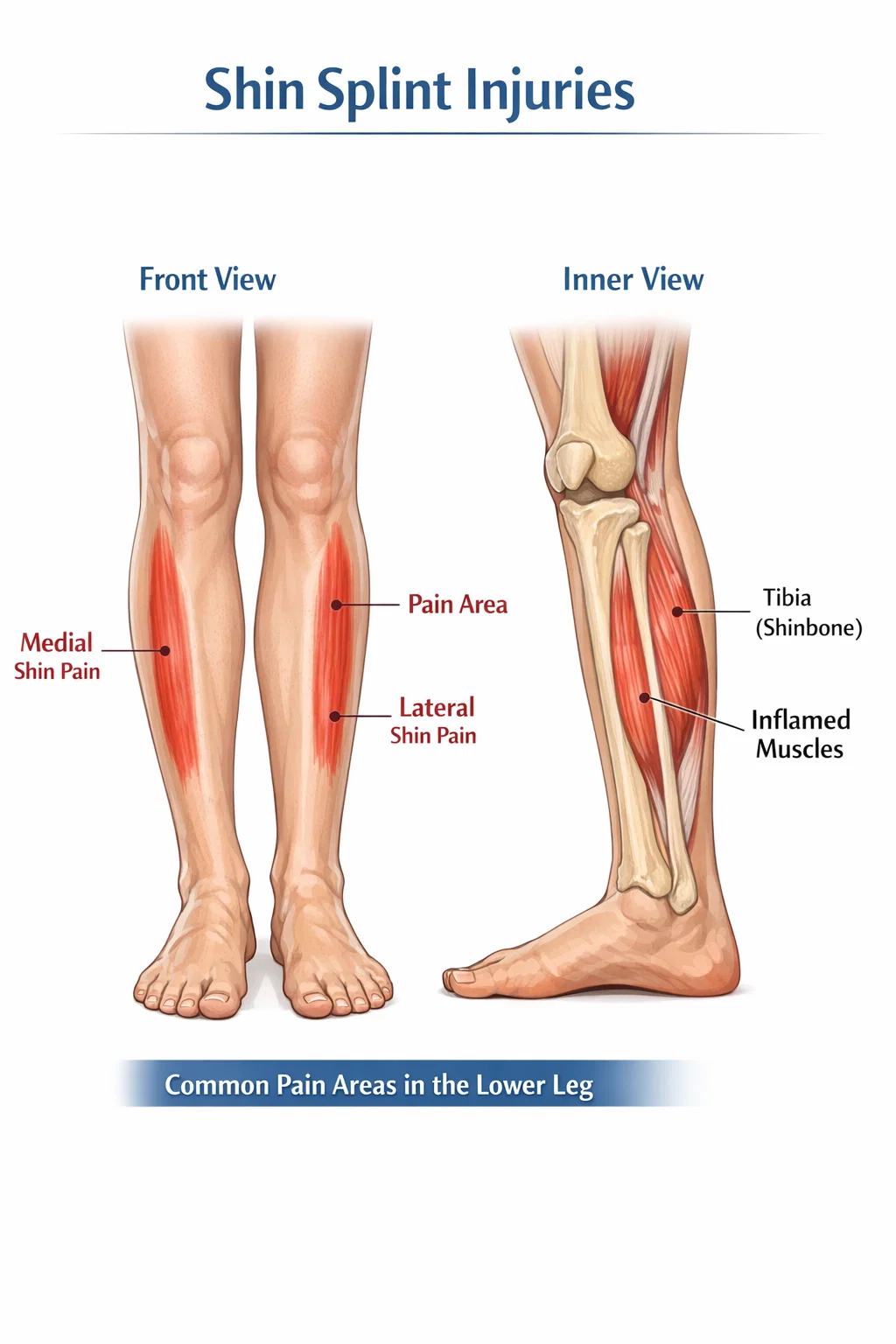
Shin splints—clinically called medial tibial stress syndrome (MTSS)—describe pain along the inner edge of the tibia. It is one of the most common early-season running injuries and a warning sign that the bone and surrounding tissues are overloaded. The good news: with smart load management and strength work, most runners recover well and avoid repeat flare-ups.
01What Shin Splints Are
MTSS is pain caused by repetitive stress on the tibia and the connective tissue that anchors calf and shin muscles to the bone. It usually presents as:
- Achy, diffuse pain along the lower 1/3 of the inner shin.
- Discomfort that warms up after 10–15 minutes, then returns after the run.
- Morning tenderness or soreness when pressing along the shin.
If pain is sharp, focal to a fingertip-sized spot, or painful at rest, a stress fracture is possible and needs assessment by a qualified health professional.
02Common Causes
- Sudden mileage spikes: Jumps in weekly volume, speed work, or hills without enough recovery days.
- Hard surfaces: Excessive running on concrete or cambered roads that shift load to one leg.
- Weak calf and foot muscles: Poor endurance in the soleus, posterior tibialis, or intrinsic foot muscles increases strain on the shin.
- Footwear mismatch: Worn-out shoes or new minimalist shoes without gradual adaptation.
- Limited ankle mobility: Tight calves can force the tibia to absorb more impact.
- Low energy availability: Under-fueling reduces bone remodeling and resilience.
03Early Care & Treatment
Start by calming symptoms and reducing bone stress.
- Relative rest: Cut weekly mileage by 30–50% and avoid speed or hills for 7–14 days.
- Cross-train: Cycling, swimming, or rowing keep fitness without impact.
- Ice or contrast: 10–15 minutes after runs can ease soreness, especially in the first week.
- Calf + foot strength: Begin isometric calf holds and short-foot exercises to restore stability.
- Check shoes: Replace worn pairs and avoid sudden changes in drop or firmness.
Most mild cases settle in 2–4 weeks. If pain persists beyond that or worsens despite reducing load, seek a professional assessment.
04Rest or Keep Training?
Complete rest is not always required, but running on painful shins can delay healing. Use these guardrails:
- Continue easy running only if pain stays at or below 3/10, does not worsen mid-run, and settles by the next morning.
- Switch to low-impact sessions if symptoms rise above 3/10 or feel worse the next day.
- Pause hills, speed, and long runs until you can run easy for 10–14 days without soreness.
- Track the trend: Pain that gradually reduces week to week is acceptable; spikes are not.
In short: keep your aerobic base with alternative training, but limit high-impact load until the shins tolerate it again.
05Return-to-Run Progression
- Phase 1: run-walk — start with 1 minute run / 1 minute walk for 15–20 minutes on flat ground, 2–3 times per week.
- Phase 2: continuous easy running — progress to 20–30 minutes continuous easy pace once pain-free in Phase 1.
- Phase 3: volume build — add 10–15% weekly volume increases, one variable at a time.
- Phase 4: reintroduce intensity — add strides first, then tempo sessions, then hills.
Keep strength work twice per week during and after the return-to-run plan to build capacity.
06Stop It Coming Back
- Plan deload weeks: Every 3–4 weeks, reduce load to let bone and tissue adapt.
- Strengthen the lower leg: Heavy slow calf raises (straight and bent knee) and tibialis raises twice weekly.
- Rotate shoes: Alternate two pairs with similar drop to spread impact stress.
- Vary terrain: Mix soft trails and track work with pavement to reduce repetitive loading.
- Respect long-run ramp: Don’t increase long-run distance and intensity in the same week.
- Fuel well: Adequate carbs, protein, and calcium/vitamin D support bone recovery.
Reminder: Shin splints are a bone stress injury signal. Treat them early and you can avoid a stress fracture and a longer layoff.
07When to Seek Help
Get assessed by a medical professional if you notice any of the following:
- Sharp, pinpoint pain in one spot on the tibia.
- Pain that persists at rest or wakes you at night.
- Visible swelling or redness over the shin.
- Loss of function, limping, or inability to hop on the affected leg.
If symptoms persist or worsen, consult a medical professional.
References and review
Editorially source-checked: June 28, 2026. The guidance was checked against the authoritative sources listed below. This guide is educational and is not a substitute for diagnosis or personal medical advice.
- Medial tibial stress syndrome treatment guidance is informed by Winters et al.'s systematic review of medial tibial stress syndrome treatment.
- Risk-factor and recurrence discussion is cross-checked against Hamstra-Wright et al.'s systematic review of medial tibial stress syndrome risk factors and running-injury review literature.
- Advice about rest, progressive loading, and referral is checked against Dubois and Esculier's BJSM PEACE & LOVE soft-tissue injury editorial, NHS inform soft-tissue injury advice, and red-flag guidance for possible bone stress injury.
Last updated: June 28, 2026
Disclaimer: This article is general information only and not medical advice. Seek personalised guidance for ongoing or severe pain.
Learn how RunCalcs reviews health, injury, recovery, and nutrition content in our editorial source-check policy.