The 10K is not just a longer 5K or a short half marathon. It asks you to be honest early, economical through the middle, and decisive late. The best strategy gives you enough restraint to reach 7K in control and enough courage to race from there.
This is a pacing strategy, not a full race prep guide
This guide focuses on how to choose a realistic 10K pace and execute it once the race starts. It does not try to cover the whole build-up: training plans, tapering, shoe choice, warm-up routines, race nutrition, travel logistics, or injury decisions.
Use it alongside the related guides at the bottom of the page. For example, the 5K and 10K Race Warm-Up guide covers the final 20 minutes before the start, while this page covers the pacing choices after the gun goes.
Set goal pace from current evidence
A 10K race is exactly 10 kilometres, or about 6.214 miles. That makes pacing easy to calculate and hard to execute: every 10 seconds per kilometre is 1 minute 40 seconds by the finish.
Start with a finish range, not a single dream number:
- Recent race: use a current 5K, 10K, or half marathon in the Race Time Predictor.
- Workout proof: goal pace should feel controlled in training blocks such as 5 x 1 km, 3 x 2 km, or a steady tempo session.
- Course reality: tight turns, hills, wind, heat, and crowded starts change effort even when your watch reports the same pace.
- Current freshness: if training has been interrupted, start at the conservative end and race the final 3K if the day opens up.
Convert the target time with the Pace Calculator, then set a small pace band. A 45:00 10K averages 4:30 per kilometre or about 7:15 per mile, but smart execution may mean opening a few seconds slower and closing a few seconds faster.
Pick the right pacing model
Most runners should start with controlled even pacing, then adjust only slightly for course and conditions. The table below gives a practical choice rather than a perfect formula.
| Runner or course | Best starting model | Why it works |
|---|---|---|
| First 10K race | Even effort with a cautious first 2K | Protects against turning the race into a survival run before halfway. |
| Experienced runner chasing a PB | Near-even splits with a small negative split | Keeps the middle honest while leaving room to race from 7K or 8K. |
| Hilly course | Even effort, uneven pace | Allows slower uphill kilometres without panic and faster running when the course gives back. |
| Hot, windy, or crowded race | Effort cap for the first half | Stops watch pace from forcing a pace that the conditions cannot support. |
| Runner with a strong finish | Conservative first 3K, progressive last 4K | Uses your strength late without giving away too much time early. |
Avoid making the model too clever. If the plan needs constant mental arithmetic, it is probably too fragile for the uncomfortable middle kilometres.
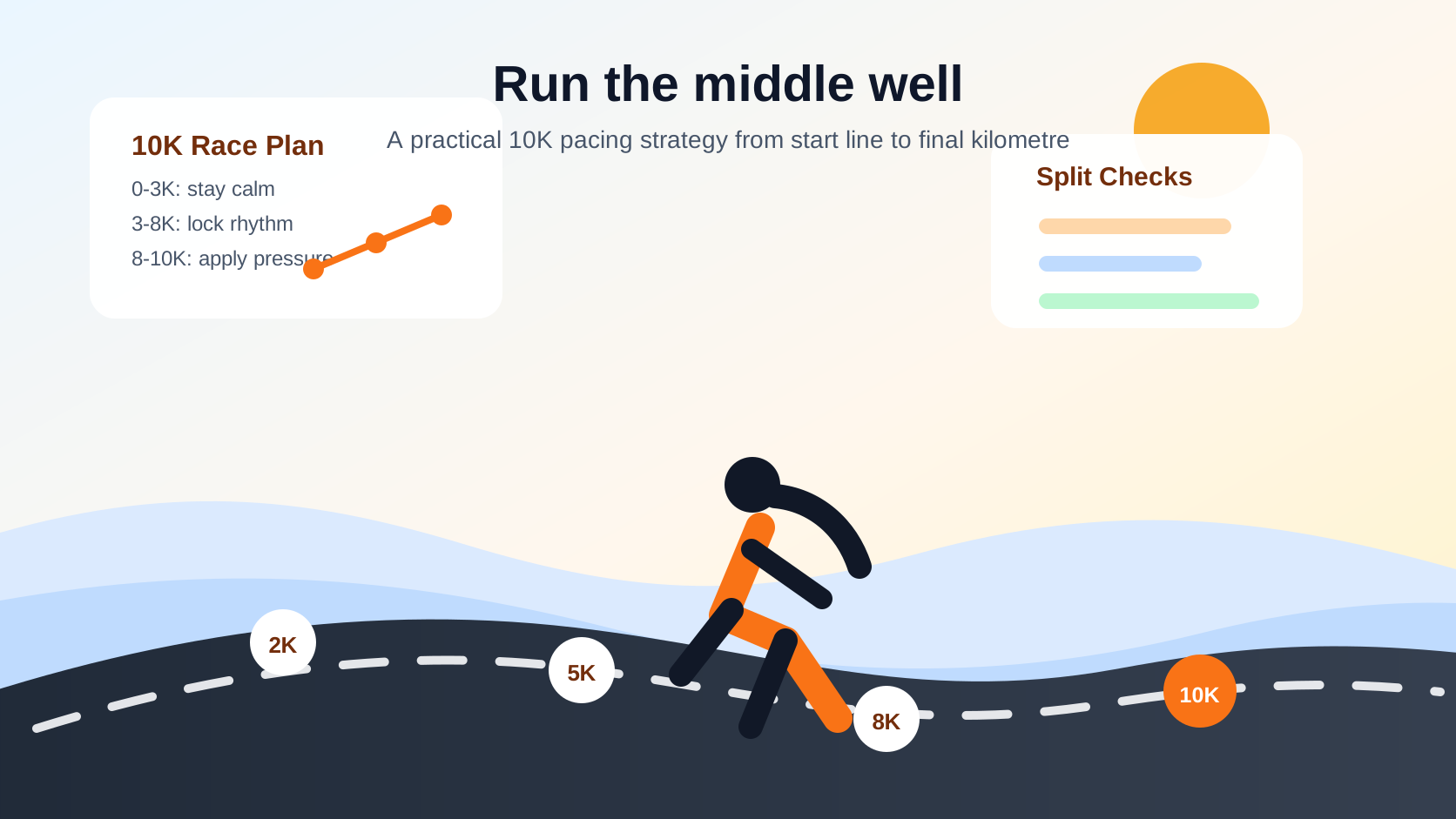
Use a three-part race plan
The 10K rewards even effort, but even effort does not always look like identical GPS splits. Use the phases below to decide what to do before fatigue starts making the decisions for you.
0 to 3 km: controlled entry
The first kilometre should feel purposeful, not heroic. Let breathing settle, avoid weaving, and check the average at the 2K marker. If you are 5 to 10 seconds slow but relaxed, that is usually easier to fix than being 20 seconds fast and already negotiating.
3 to 8 km: rhythm under pressure
This is where most 10K races are made. Hold rhythm, keep form quiet, and avoid reacting to every runner who moves past. Your job is to keep the pace honest without turning kilometre 5 into a 5K finish effort.
8 km to finish: commit without sprinting too soon
At 8K, decide. If breathing and form are controlled, increase pressure. If the race is already at the limit, focus on keeping cadence and posture stable until the final kilometre. The finishing sprint matters, but the more useful move is usually a sustained lift from 8K or 9K.
Use a simple decision rule at the 8K marker: if you can say a short phrase in your head and your stride still feels coordinated, press. If your shoulders are tight, breathing is ragged, and pace is already slipping, hold form first and save the final move for the last kilometre.
Check 2K and 5K splits
Checking every few seconds makes pacing worse for many runners. Bigger checkpoints reduce watch panic and expose the trend.
| Checkpoint | Even-split target | Race cue |
|---|---|---|
| 2 km | 9:00 | Calm, no early debt |
| 5 km | 22:30 | Working, but not racing the finish yet |
| 8 km | 36:00 | Ready to apply pressure |
| 9 km | 40:30 | Commit to the final kilometre |
| Finish | 45:00 | Empty the tank after the last turn or marker |
For a slight negative split, aim to pass 5K only a few seconds slower than halfway target, not 30 seconds behind. The 10K is short enough that a dramatic late rescue usually leaves too much time on the road.
What to do if a checkpoint is off
- 5 to 15 seconds fast at 2K: relax immediately and let the next kilometre drift back toward target.
- More than 20 seconds fast at 2K: treat it as a warning sign, not a bonus. Reset before the middle of the race becomes damage control.
- 5 to 15 seconds slow at 5K: stay patient and recover the time gradually between 6K and 9K.
- More than 30 seconds slow at 5K: only chase the original goal if effort is clearly under control. Otherwise switch to the best possible finish from where you are.
Quick 10K pace table
Use these common finish times as a sanity check, then build exact splits in the Splits Planner.
| 10K goal | Pace per km | Pace per mile | 5K split |
|---|---|---|---|
| 40:00 | 4:00/km | 6:26/mi | 20:00 |
| 45:00 | 4:30/km | 7:15/mi | 22:30 |
| 50:00 | 5:00/km | 8:03/mi | 25:00 |
| 55:00 | 5:30/km | 8:51/mi | 27:30 |
| 60:00 | 6:00/km | 9:39/mi | 30:00 |
Adjust on race day
A useful pacing plan includes adjustment rules. Set them before the start so fatigue does not get a vote.
- If the start is crowded: stay smooth and recover time gradually by 5K, not in one angry surge.
- If the course is windy: judge effort into the wind and use sheltered groups when it is safe and fair to do so.
- If hills break the rhythm: let pace slow uphill, then return to controlled pressure over the top instead of sprinting downhill.
- If goal pace feels too hard by 3K: reset early and aim to make the second half cleaner than the first.
- If you feel great at 5K: wait. The first real move belongs closer to 7K or 8K.
Avoid common 10K pacing mistakes
- Starting at 5K effort: the first kilometre can feel strangely easy because adrenaline is high. If the pace would be aggressive for a 5K, it is reckless for a 10K.
- Trying to bank time: early time savings usually cost more than they give back. A small early buffer can become a large late fade.
- Judging the whole race by kilometre 1: GPS error, crowding, and start-line surges can make the first split noisy. Check again at 2K before changing the plan.
- Letting the middle go soft: many 10K races are lost between 4K and 7K, when the finish still feels far away and concentration drops.
- Sprinting at 8K: a hard move too early can create a long final kilometre. Press from 8K, race from 9K, sprint when the finish is genuinely close.
Related tools and guides
- Pace Calculator
- Splits Planner
- Race Time Predictor
- 5K and 10K Race Warm-Up
- Even Pace and Negative Splits
- Running and Race Etiquette
- Tempo Runs and Threshold Training
- How Fast Should I Run a 5K?
- Half Marathon Pacing Strategy
Sources and review
Last editorial source check: August 8, 2026. This race-planning guide is general running education, not individual coaching or medical advice.
- Road-race distance and measurement context is checked against the AIMS road-race measurement resources and World Athletics records by category.
- Even-pacing and athlete decision-making guidance is informed by Abbiss and Laursen's review of pacing strategies during athletic competition.
- The risk of overly aggressive early pacing is cross-checked against research on pacing strategy and fatigue during endurance exercise.
- Race-day adjustment advice is checked against a review of pace manipulation in endurance sport.
- Physiology context for hard but sustainable running is informed by research on velocity at lactate threshold and endurance running performance.
Last updated: August 8, 2026